By 2050, our food system will undergo profound transformations. Discover the innovations that will shape our plates, from alternative proteins and artificial intelligence to sustainable agriculture.
A transition towards sustainable proteins
Food is at the heart of global challenges, caught between population growth, resource depletion, and climate change. By 2050, the world's population will reach 9.7 billion ( UN, 2022 ), and it will be necessary to rethink our production and consumption patterns. The future of our food system lies in a dynamic that combines technological innovations and sustainable solutions.
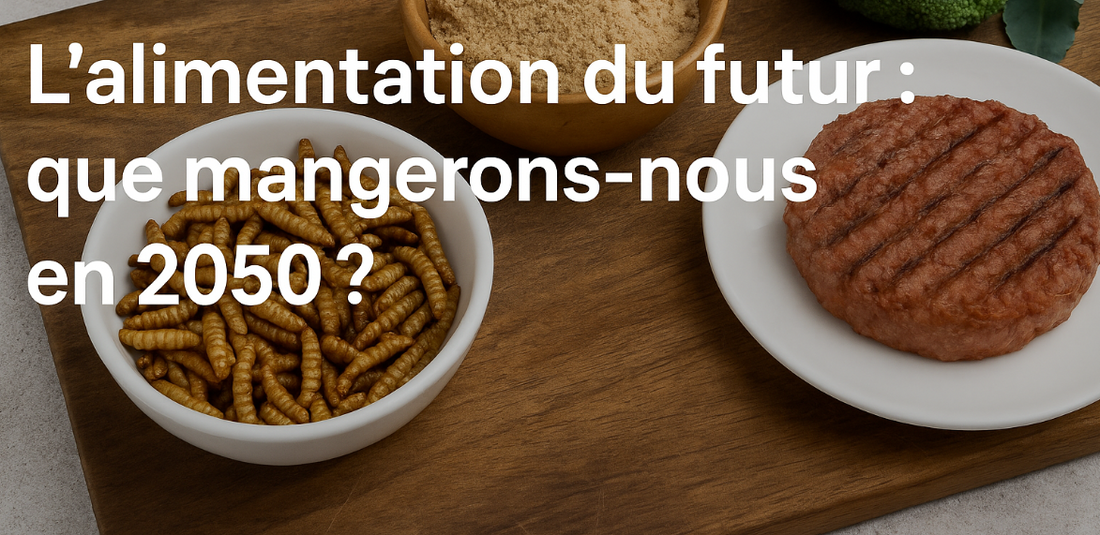
One of the major developments concerns protein. Demand is exploding, and animal resources are no longer sufficient to meet it. Cultured meat, according to McKinsey & Company , could represent $25 billion by 2030. This solution drastically reduces the carbon footprint and water consumption compared to traditional livestock farming. At the same time, edible insects offer an alternative rich in protein and essential fatty acids. They require 12 times less feed than beef to produce the same amount of protein ( FAO, 2021 ). Plant-based proteins and algae, such as spirulina and chlorella, are becoming increasingly common in our diets, guaranteeing optimal nutritional intake with a low environmental impact.
Artificial intelligence in the service of food
Artificial intelligence is also revolutionizing the way we eat. Solutions like DNA-based nutritional coaching allow for the adaptation of nutritional recommendations to each individual's genetic needs. Companies like DNAfit are developing personalization technologies that analyze our genome to suggest optimized diets.
At the same time, smart refrigerators, thanks to AI, identify available food and suggest suitable recipes, thus helping to reduce food waste, which currently amounts to 1.3 billion tons per year according to the FAO. 3D food printing, already under development, could also transform the way we cook by creating complete meals from natural ingredients.
More ethical and local consumption
Faced with environmental concerns, consumption is becoming more ethical and local. Urban agriculture and vertical farms are emerging as a viable solution, particularly in a world where 70% of the population will live in cities by 2050 ( UN ). Indoor cultivation under LED lights allows for local, pesticide-free production, thus ensuring healthy and accessible food year-round.
Meanwhile, the valorization of food waste is developing, with startups like ReGrained transforming brewery byproducts into flours rich in fiber and protein. With overfishing endangering our oceans, alternatives to seafood are multiplying. Plant-based fish and lab-grown fish are emerging as a solution for preserving marine biodiversity while meeting global food needs.
Finally, a changing food future
By 2050, our food will be more sustainable, more personalized, and heavily influenced by new technologies. Traditional meat will give way to more eco-friendly alternatives, artificial intelligence will guide our food choices, and local agriculture will play a major role in our daily consumption. EatEct supports you in this transition to innovative and responsible food. To stay up-to-date on the latest trends, subscribe to our blog and discover how to prepare for the food of tomorrow.